


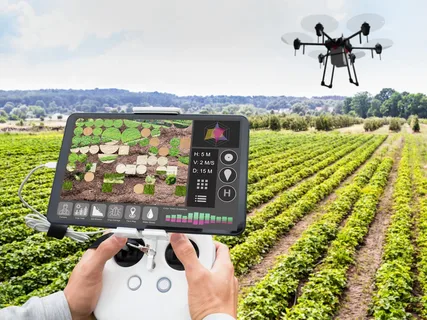
In recent years, the agricultural sector has witnessed a significant transformation driven by technological advancements. Among these, precision agriculture stands out as a game-changer. Understanding how precision agriculture is revolutionizing crop management helps us appreciate the potential of modern farming techniques to enhance productivity, sustainability, and efficiency.
What is Precision Agriculture?
Precision agriculture, also known as precision farming, involves using advanced technologies such as GPS, sensors, drones, and data analytics to monitor and manage crops at a micro level. This approach allows farmers to optimize inputs like water, fertilizers, and pesticides, targeting only where and when they are needed.
Key Technologies Driving the Revolution
1. GPS and GIS Mapping
With GPS-enabled devices and Geographic Information Systems (GIS), farmers can create detailed maps of their fields. These maps help identify soil variability, crop health, and pest infestations, enabling site-specific interventions.
2. Remote Sensing and Drones
Drones equipped with cameras and sensors provide real-time aerial images and data. This technology helps farmers monitor crop health, detect diseases early, and assess irrigation needs, all without physically walking the fields.
3. Soil and Crop Sensors
Sensors placed in the soil or on plants measure moisture levels, nutrient content, and other vital parameters. This data ensures precise application of water and fertilizers, reducing waste and environmental impact.
Benefits of Precision Agriculture in Crop Management
The question of how precision agriculture is revolutionizing crop management can be answered by looking at the numerous benefits it offers:
- Increased Yield: By tailoring farming practices to the specific needs of different field zones, farmers can maximize crop productivity.
- Resource Efficiency: Precision agriculture reduces the overuse of water, fertilizers, and pesticides, saving costs and preserving natural resources.
- Environmental Sustainability: Minimizing chemical runoff and soil degradation promotes healthier ecosystems.
- Risk Reduction: Early detection of crop stress and pests enables timely interventions, reducing losses.
Real-World Applications
Farmers worldwide are adopting precision agriculture to improve their crop management strategies. For instance, variable rate technology (VRT) allows machinery to apply inputs at varying rates across a field, rather than uniformly. This customization directly addresses the unique requirements of different crops and soil types.
Challenges and Future Prospects
While how precision agriculture is revolutionizing crop management is clear, challenges such as high initial costs, technical complexity, and the need for farmer education remain. However, ongoing innovations and decreasing technology costs promise wider adoption in the future.
Conclusion
In summary, precision agriculture represents a revolutionary shift in crop management by integrating technology with farming practices. Understanding how precision agriculture is revolutionizing crop management not only highlights its current impact but also points toward a future where agriculture is smarter, more efficient, and more sustainable.
